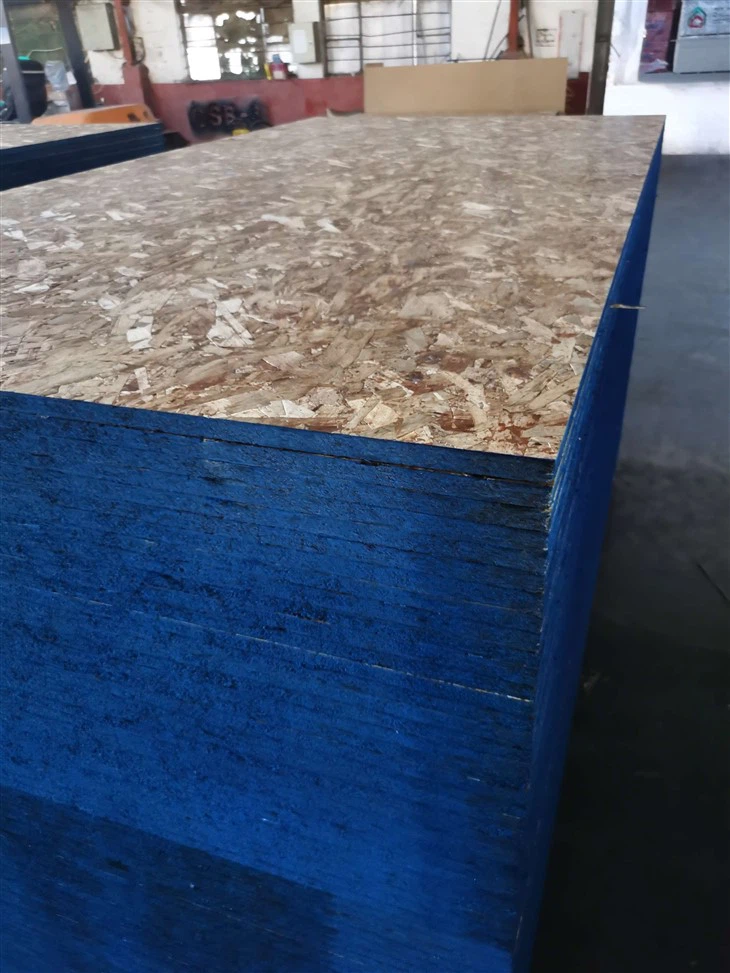


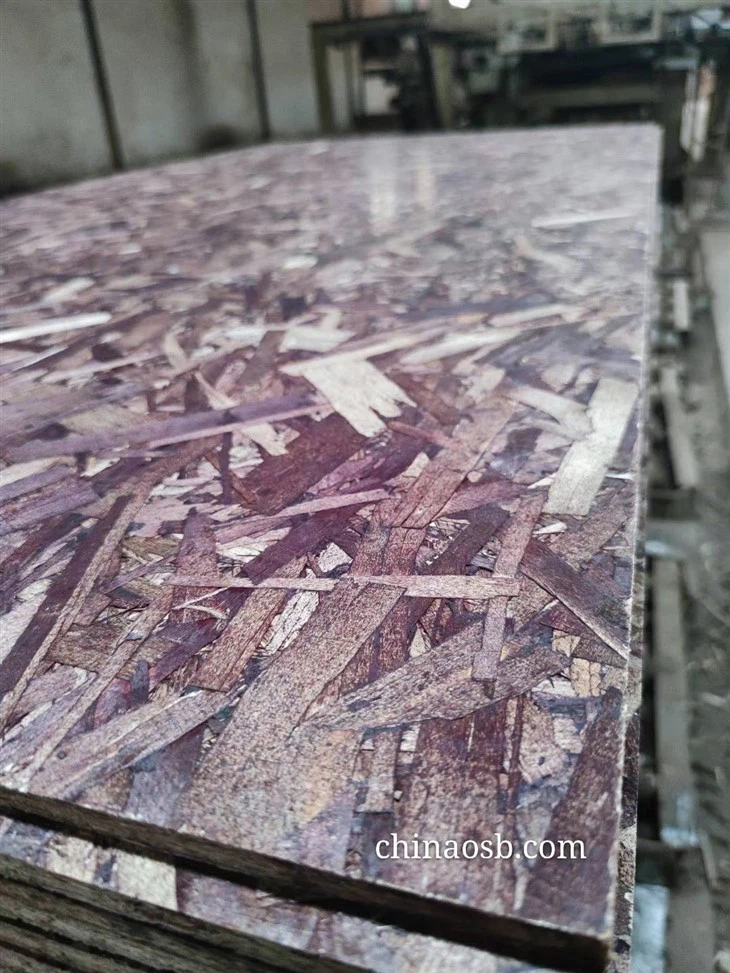
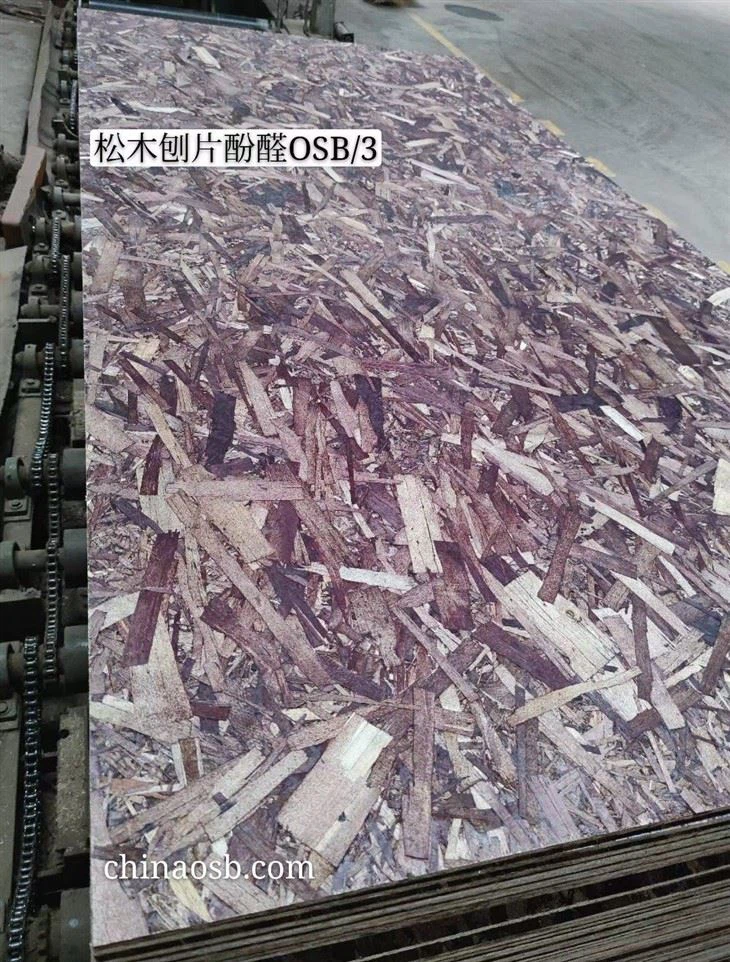
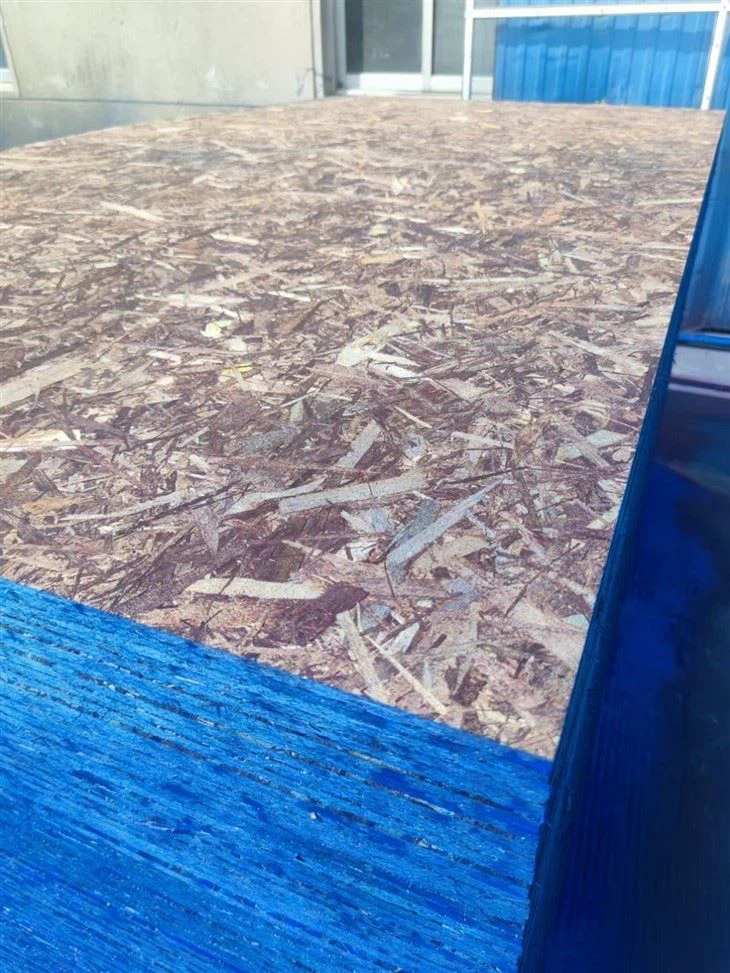
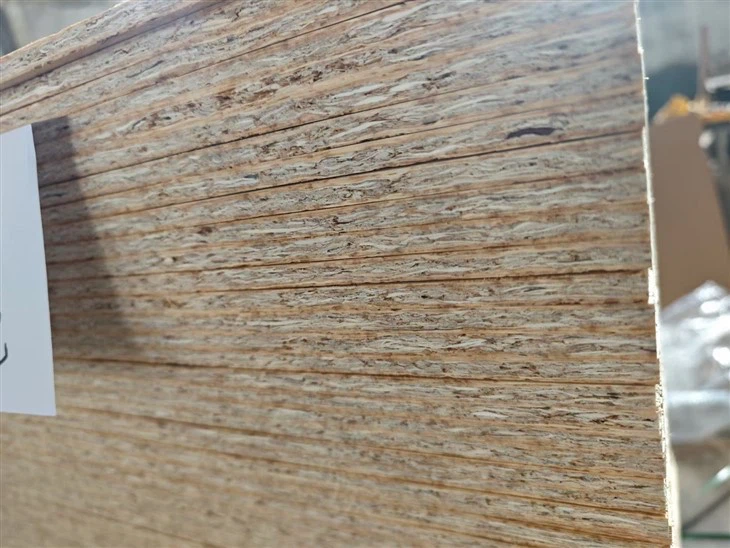
12mm 18mm Construction Osb3 Board
OSB - 3 is a high - performance wood - based panel. Made from wood flakes, it has good strength, dimensional stability and durability. It's eco - friendly as it utilizes wood residues. Widely used in construction for roofs, floors and walls.
Description
OSB - 3: Production Process and Product Introduction
1. Introduction to OSB - 3
(1) Definition
OSB - 3 (Oriented Strand Board - 3) is a type of high - performance wood - based structural panel. It is made from wood flakes (usually small - diameter logs, thinnings, or wood processing residues) through processes such as drying, gluing, oriented laying, and hot - pressing.
(2) Performance Characteristics
- Structural Performance
- High Strength and Stiffness: Due to the oriented - laying structure of wood flakes, it has good tensile strength in the direction parallel to the orientation of the wood flakes and can bear large structural loads. This makes it widely used in building structures, such as for roofs, floors, and wall components.
- Good Dimensional Stability: Compared with traditional plywood and solid wood panels, OSB - 3 is less likely to warp or deform in environments with large humidity changes. This is because the hot - pressing process and the use of adhesives during production make the wood flakes inside the panel tightly bonded, forming a stable structure.
- Durability
- Good Weather Resistance: After special surface treatment (such as waterproof coating or impregnation treatment), it can resist the erosion of natural factors such as rain and sunlight, and is suitable for use in outdoor building structures, such as outdoor terraces and building exterior wall sheathing.
- Resistance to Insects and Bacteria: The adhesives used and treatment processes in production can prevent insect infestation and microbial erosion to a certain extent, prolonging the service life of the panel.
- Environmental - friendly Features
- Sustainable Building Material: The raw materials of OSB - 3 mainly come from fast - growing timber and wood processing residues, effectively utilizing wood resources and reducing the dependence on natural forest resources.
- Low - formaldehyde Emission: Some OSB - 3 products use adhesives that meet environmental protection standards, such as adhesives with low - formaldehyde emission, meeting the environmental requirements for indoor use.
2. Production Process of OSB - 3
(1) Raw Material Preparation
- Wood Selection
- Small - diameter logs, thinnings, and wood processing residues (such as wood flakes and sawdust) are mainly selected. These wood sources are widespread and can fully utilize forestry resources. When selecting wood, attention should be paid to the type and quality of the wood. Generally, both coniferous and broad - leaved woods can be used for OSB - 3 production, but the physical properties of different woods will affect the final performance of the panel.
- Wood Debarking and Flaking
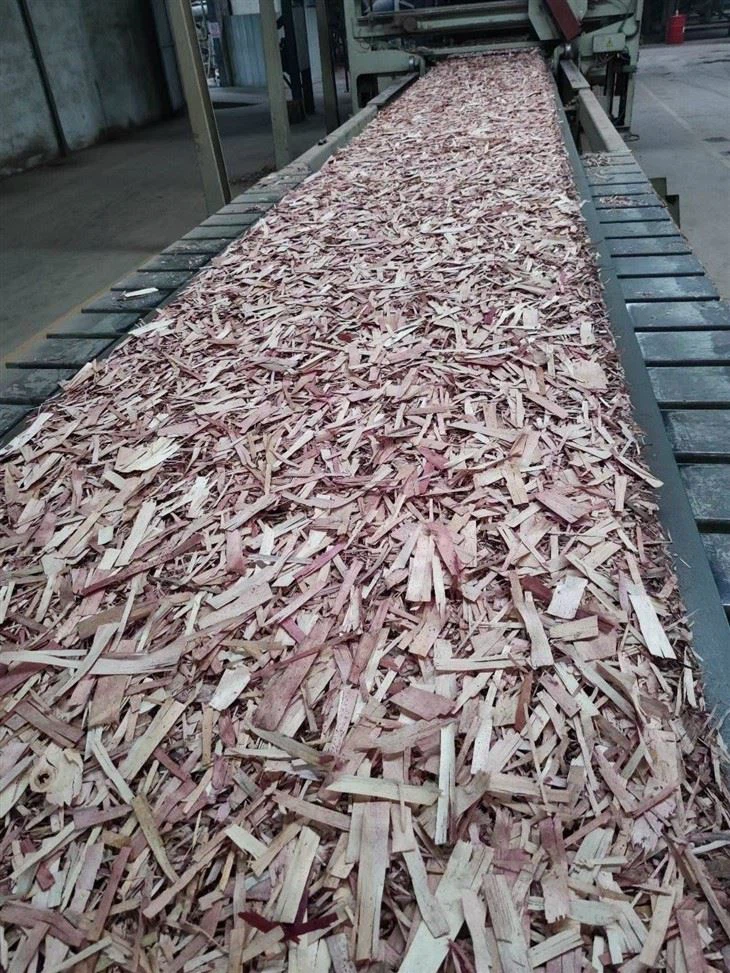
- First, the wood is debarked to remove impurities such as bark. Then, a flaker is used to process the wood into wood flakes of a certain specification. The length, width, and thickness of the wood flakes need to be controlled according to product requirements. For example, the length of the wood flakes is usually between 20 - 150 mm, and the thickness is between 0.3 - 0.7 mm.
- Wood Flake Drying
- Drying is an important step in OSB - 3 production. The freshly flaked wood flakes have a high water content and need to be dried to an appropriate moisture content, generally between 2 - 8%. The drying process usually adopts the hot - air drying method. Hot air is blown into the wood flake pile through a drying kiln or dryer to evaporate the water inside the wood flakes. The drying process requires strict control of temperature, humidity, and ventilation conditions to ensure that the wood flakes are dried evenly and avoid problems such as cracking and deformation.
(2) Adhesive Preparation and Application
- Adhesive Selection
- According to the performance requirements of OSB - 3, a suitable adhesive is selected. Common adhesives include urea - formaldehyde resin (UF), phenol - formaldehyde resin (PF), etc. For OSB - 3 products, the adhesive is required to have good adhesiveness, water resistance, and durability. Phenol - formaldehyde resin adhesive is widely used in OSB - 3 production due to its excellent water resistance and strength performance.
- Adhesive Preparation
- If urea - formaldehyde resin adhesive is used, urea, formaldehyde and other raw materials need to be mixed in a certain proportion and reacted under specific temperature and pH conditions to generate urea - formaldehyde resin adhesive. Phenol - formaldehyde resin adhesive is made by the reaction of phenol and formaldehyde.,During the preparation process, the reaction conditions, such as reaction temperature, reaction time, and raw material ratio, need to be accurately controlled to ensure the quality of the adhesive.
- Adhesive Application
- The prepared adhesive is evenly applied to the dried wood flakes. There are several application methods, such as spray application and roller application. The application amount is determined according to product requirements, generally between 4 - 10%. During the application of the adhesive, it is necessary to ensure that the adhesive is evenly distributed on the surface of the wood flakes to avoid the situation of too much or too little adhesive locally, which will affect the quality and performance of the panel.
(3) Oriented Laying
- Wood Flake Screening and Classification
- Before laying, the wood flakes with adhesive applied need to be screened and classified. According to the size, shape, and quality of the wood flakes, they are classified so that different types of wood flakes can be laid in a certain direction and proportion.
- Oriented Laying Equipment Operation
- Oriented laying equipment is used to lay the wood flakes in a specific direction. Usually, the long - axis direction of the wood flakes is laid parallel or at a certain angle (such as 45 degrees) to the length direction of the panel. This can make the panel have better strength performance in a specific direction. During the laying process, the laying density and uniformity of the wood flakes need to be controlled to ensure the uniform internal structure of the panel.
(4) Hot - pressing and Forming
- Hot - pressing Process Parameter Setting
- The oriented - laid wood flake blank is sent to a hot press for hot - pressing. The main process parameters in the hot - pressing process include hot - pressing temperature, hot - pressing pressure, and hot - pressing time. For OSB - 3 products, the hot - pressing temperature is generally between 180 - 220 °C, the hot - pressing pressure is between 2 - 5 MPa, and the hot - pressing time is determined according to the thickness of the panel, usually 1 - 2 minutes per millimeter of thickness.
- Hot - pressing Process
- During the hot - pressing process, heat and pressure cause the adhesive between the wood flakes to cure and make the wood flakes tightly bonded together to form a panel. The hot - pressing process requires accurate control of process parameters to ensure the quality of the panel. If the hot - pressing temperature is too high or the time is too long, it may cause problems such as surface carbonization and internal structure destruction of the panel; if the hot - pressing temperature is too low or the time is too short, the adhesive cannot be fully cured, affecting the strength and bonding performance of the panel.
(5) Post - treatment
- Cooling and Cutting
- The hot - pressed panel needs to be cooled to near room temperature. After cooling, the panel is cut according to product specification requirements, and the irregular edges are removed to obtain OSB - 3 panels of standard dimensions.
- Surface Treatment and Quality Inspection
- Surface treatment can be carried out according to needs, such as sanding treatment, to make the panel surface smooth and flat and improve the surface quality. Then quality inspection is carried out. The inspection items include panel dimension accuracy, strength performance, moisture content, formaldehyde emission, etc. Only panels that pass the quality inspection can enter the market as qualified products.
| Types | OSB2 ,OSB3 ,OSB4 |
| Certificate | CE,CARB,FSC,CCC |
| Usage | Outdoor, furniture, decoration,packing, construction |
| Glue | E0,E1,E2 |
| Slab Structure | Gradient Structure Boards |
| Density | 600-700kg/cbm |
| Material | Poplar,Pine,Hardwood,Combi |
| Thickness | 6mm-45mm |
| Size | 220*2440mm, 1830*2440mm, 1830*2745mm |


Hot Tags: 12mm 18mm construction osb3 board, China 12mm 18mm construction osb3 board manufacturers, suppliers, factory, Combi Core Film Faced Plywood, Joint Core Film Faced Plywood, F11 Film Faced Plywood, Linyi Film Faced Plywood, 18mm Film Faced Plywood, F17 Film Faced Plywood