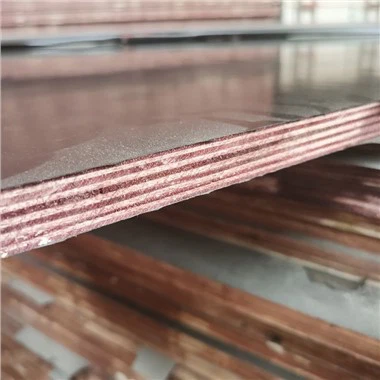
What factors are related to the strength that plywood can withstand?
Mar 01, 2023
The strength of lengthened plywood has nothing to do with its size, but considering the practical application, when the length of plywood of the same size increases, the bearable weight gradually decreases, and it is directly related to the number of plywood layers. Generally speaking, the bending design values of 5-ply board and 2-ply board are 35N/mm and 37N/mm2 respectively. Let's compare with an example. Have you ever thought about assuming a load of 50kg for a piece of 9mm plywood, and two pieces of plywood overlapped to support a weight of 100kg? In addition to the load bearing capacity of the overlap, the weight distribution should also be considered.
Generally speaking, after using two boards, the force of the second board is better than that of the single board, because the upper board is distributed, which can exert the strength of the lower board, and the surrounding force is more distributed, thereby reducing the bending moment. Logically speaking, when two pieces of goods are stacked together, their carrying capacity will increase by 7 times than before. Then consider another analysis.
If a 1 meter long LVL plywood can hold 50 kg, can a 2 meter long plywood hold 100 kg? This is obviously impossible, because the longer the plywood, the easier it is to break, because the longer the moment of the plywood, The greater the pull on the bottom of the plywood. When the tension is greater than the plywood itself can withstand, the plywood will break. Therefore, thickening can increase the load-bearing capacity of plywood, while lengthening can reduce the load-bearing capacity of plywood. This is why plywood is usually thicker.