






Factory Price 11/15/18mm 4*8FT OSB3 Construction Grade For Building Materials
OSB3 is an engineered wood product. Composed of oriented wood strands bonded with adhesives. It has high strength, good for structural applications in construction like flooring, roofing and wall sheathing. With reasonable moisture resistance, not fully waterproof but can handle some exposure. Also shows decent dimensional stability, less likely to warp. In addition, it has some fire - resistance properties and can contribute to acoustic performance. Overall, it's a cost - effective and versatile material widely used in building and furniture - making industries.
Description
OSB - 3 Product Introduction
I. Definition and Composition
OSB - 3, which stands for Oriented Strand Board - 3, is a high - performance engineered wood product. It is composed of wood strands or flakes that are arranged in specific orientations and bonded together with adhesives under high pressure and temperature.
A. Wood Source
The raw material for OSB - 3 is typically softwood, such as pine or spruce. These woods are chosen for their availability, strength properties, and suitability for the manufacturing process. The wood is first debarked and then cut into strands of a specific length and thickness.
B. Adhesive System
The adhesives used in OSB - 3 play a crucial role in its performance. Phenolic resins are commonly employed due to their excellent bonding strength, moisture resistance, and durability. These adhesives ensure that the wood strands are firmly held together, creating a stable and strong panel.
II. Structure and Manufacturing Process
A. Structure
1. Surface Layers
- The outer layers of OSB - 3 consist of long, thin wood strands that are predominantly oriented in the direction of the panel's length or width. This orientation provides enhanced strength and stiffness to the panel in these directions.
- The surface strands are carefully arranged to create a relatively smooth surface, which is beneficial for further finishing operations or when used in applications where surface smoothness is required.
2. Core Layer
- The core of the OSB - 3 panel contains shorter and thicker wood strands that are arranged more randomly. This random orientation in the core helps to distribute loads evenly across the panel and provides additional strength and resistance to impact.
B. Manufacturing Process
1. Strand Preparation
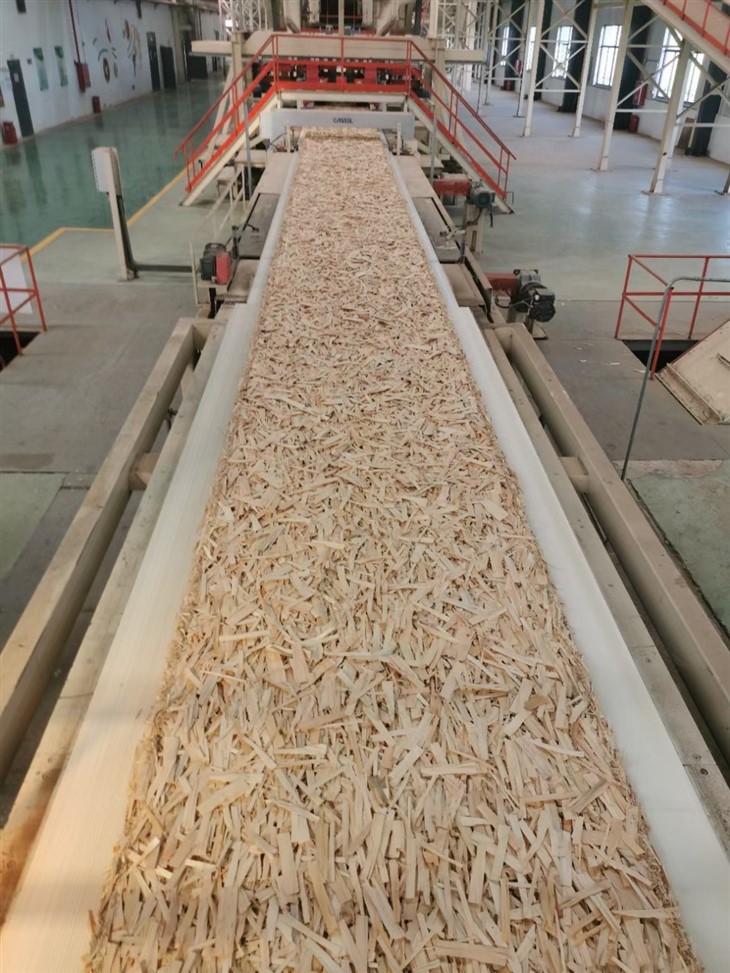
- After the wood is sourced, it is chipped into strands of varying lengths. The strands are then dried to a specific moisture content, typically in the range of 2 - 6%. This drying process is crucial as it helps to improve the bonding efficiency of the adhesives and reduces the potential for warping or splitting during the manufacturing process.
2. Blending with Adhesives
- The dried wood strands are then mixed with the phenolic resin adhesive in a large blender. The amount of adhesive added is carefully controlled to ensure optimal bonding strength without excessive use, which could affect the panel's cost - effectiveness.
3. Mat Formation and Pressing
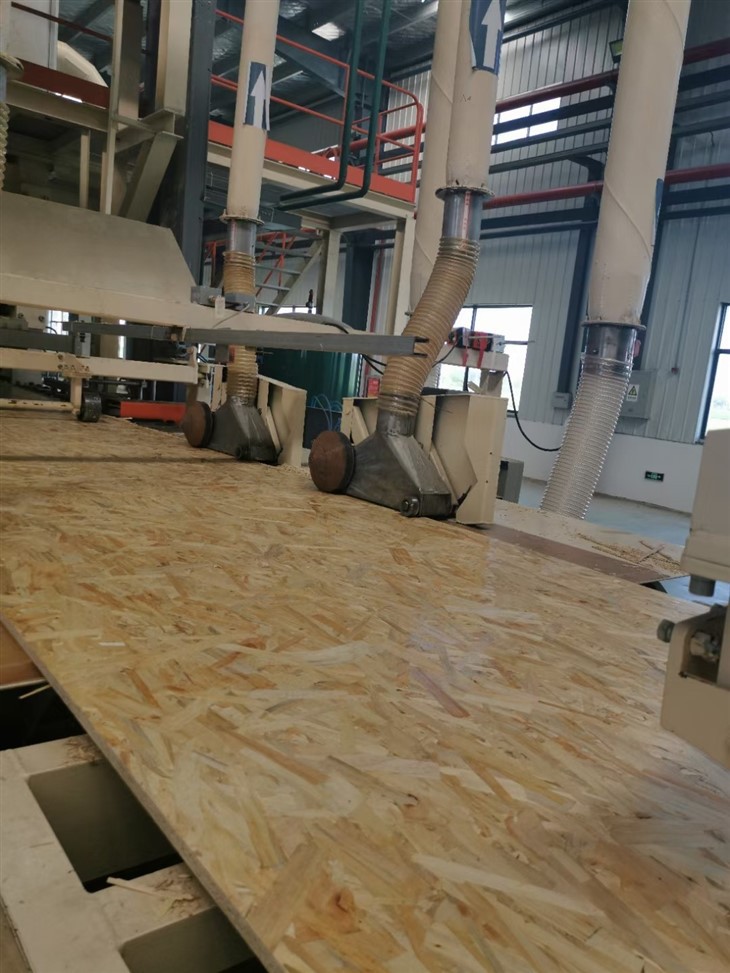
- The adhesive - coated strands are then formed into a mat. The mat is carefully layered to achieve the desired structure, with the surface layers having the appropriate strand orientation. This mat is then placed in a large press, where high pressure and temperature are applied. The typical pressing temperature is around 180 - 200°C, and the pressure can range from 3 - 5 MPa. This process cures the adhesive and bonds the strands together into a solid panel.
III. Performance Characteristics
A. Mechanical Properties
1. Strength
- Bending Strength: OSB - 3 has a high modulus of rupture (MOR), which indicates its ability to resist bending forces. This makes it suitable for applications where the panel will be subjected to loads that cause bending, such as in floor and roof sheathing. The MOR of OSB - 3 can typically range from 20 - 30 MPa, depending on the manufacturing parameters and the quality of the raw materials.
- Tensile Strength: It also exhibits good tensile strength, both parallel and perpendicular to the strand orientation. The tensile strength parallel to the orientation of the surface strands can be as high as 10 - 15 MPa. This property is important in applications where the panel may be subject to pulling or stretching forces, such as in structural bracing systems.
2. Stiffness
- The modulus of elasticity (MOE) of OSB - 3 is relatively high, which means it is a stiff material. A typical MOE value for OSB - 3 can be in the range of 3000 - 5000 MPa. This stiffness property ensures that the panel will not deform significantly under normal loads, providing stable support in construction applications.
B. Dimensional Stability
1. Moisture - Induced Movement
- OSB - 3 has been engineered to have good dimensional stability in the face of moisture changes. When exposed to humidity variations, it experiences relatively small swelling and shrinkage compared to some other wood - based products. The swelling coefficient in the thickness direction, for example, can be as low as 1 - 2% when the relative humidity changes from 30% to 80%.
2. Temperature - Induced Movement
- It also shows reasonable stability with respect to temperature changes. Although extreme temperature variations can cause some minor expansion or contraction, the overall impact on the panel's dimensions is minimal within the normal operating temperature range for building applications.
C. Moisture and Water Resistance
1. Moisture Resistance
- OSB - 3 has a certain level of moisture resistance due to the phenolic resin adhesive used and the tight bonding of the wood strands. In environments with normal humidity levels, it can maintain its integrity and performance. It is less likely to absorb moisture compared to untreated solid wood, reducing the risk of mold growth and decay.
2. Water Resistance
- While not fully waterproof, OSB - 3 has improved water - resistance compared to standard OSB grades. It can withstand short - term exposure to water, such as during construction when it may be exposed to rain or snow for a limited period. However, for long - term or continuous water exposure, additional waterproofing measures, such as applying a waterproof membrane or coating, are recommended.
D. Fire Resistance
1. Inherent Properties
- OSB - 3 has some natural resistance to fire due to the phenolic resin, which is a relatively fire - resistant material. When exposed to a heat source, the phenolic resin chars rather than burns rapidly, creating a protective layer that can slow down the spread of fire.
2. Enhanced Fire Resistance
- To further improve fire resistance, OSB - 3 can be treated with fire - retardant additives. These additives can increase the panel's fire - rating, allowing it to meet more stringent building code requirements for fire safety in applications such as in multi - story buildings or commercial structures.
E. Acoustic Properties
1. Sound Absorption
- OSB - 3 has some sound - absorbing capabilities. The porous structure created by the wood strands and the spaces between them can absorb sound waves, reducing echo and noise levels within a room. The sound absorption coefficient of OSB - 3 can vary depending on the frequency of the sound, but it generally shows better performance in the mid - to - high frequency range.
2. Sound Insulation
- While not as effective as dedicated sound - insulation materials, OSB - 3 can also contribute to sound insulation to a certain extent. When used in combination with other building materials, such as insulation batts or gypsum board, it can help to reduce the transmission of sound between rooms or from the outside environment.
IV. Applications
A. Building and Construction
1. Floor Sheathing
- OSB - 3 is widely used as floor sheathing in residential and commercial buildings. Its high strength and stiffness can support the loads imposed by people, furniture, and equipment. It provides a stable base for the installation of flooring materials such as hardwood, laminate, or carpet.
2. Roof Sheathing
- In roof construction, OSB - 3 is used as a sheathing material. It can withstand the dead loads of the roofing materials (such as shingles or metal roofing) and the live loads from wind, snow, etc. Its dimensional stability also helps to prevent roof sagging or distortion over time.
3. Wall Sheathing
- As wall sheathing, OSB - 3 offers structural support to the walls and helps to distribute lateral loads. It can also act as a substrate for exterior finishes such as siding or stucco and interior finishes like drywall.
B. Furniture and Cabinetry
1. Structural Components
- In furniture manufacturing, OSB - 3 can be used for structural components such as frames, shelves, and back panels. Its strength and stability make it a cost - effective alternative to solid wood in some applications.
2. Cabinet Bodies
- It is also suitable for constructing cabinet bodies. The smooth surface of OSB - 3 can be easily finished with veneer, laminate, or paint, giving a pleasing aesthetic appearance while maintaining the necessary strength for the cabinet's function.


Hot Tags: factory price 11/15/18mm 4*8ft osb3 construction grade for building materials, China factory price 11/15/18mm 4*8ft osb3 construction grade for building materials manufacturers, suppliers, factory, 17mm Film Faced Plywood, Black Film Faced Plywood, Finger Joint Core Film Faced Plywood, Anti Slip Film Faced Plywood, Plywood, Shuttering Film Faced Plywood


